




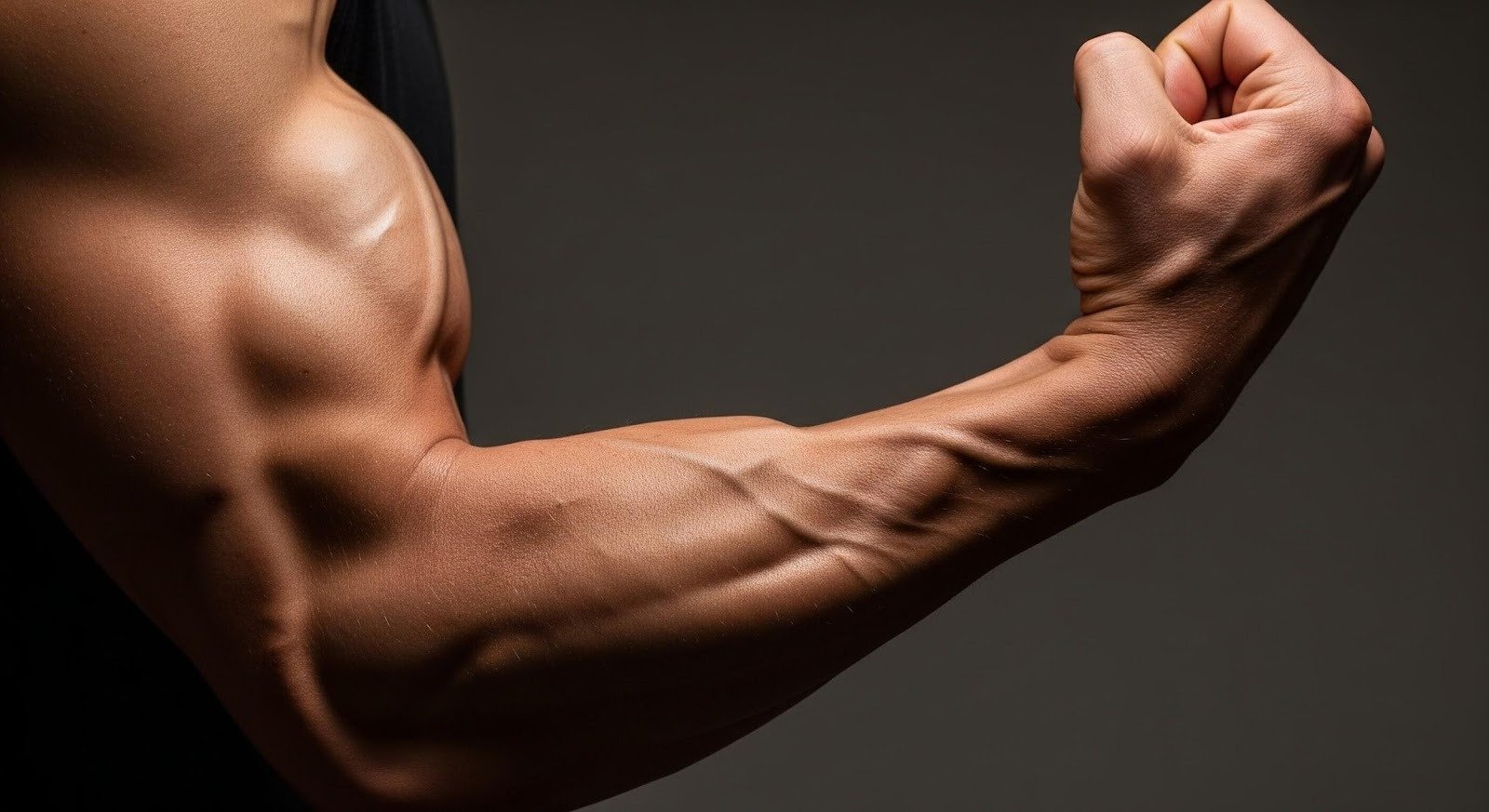
In Squegg, many individuals are surprised to learn that the development of the forearms is not just a function of gripping the bar harder or lifting heavier weights. The forearms are very trainable but will quickly adapt and plateau if errors are made. The forearms are seen to get involved in almost every upper body exercise that exists. Forearms are basically involved in pull-ups, rows, deadlifts, curls, and even grocery shopping. But direct development is frequently overlooked because of a lack of attention to them or training. Understanding what is going wrong can help significantly in terms of making a difference in strength and muscle development.
Ignoring Direct Forearm Training
The first error is in thinking that compound exercises alone are sufficient. Compound exercises will engage the forearms. But they may not provide sufficient direct stimulation for proper development. If grip strength is not strong early in compound exercises, it is probably safe to assume that the larger muscles are not being fully stimulated either.
Direct exercises such as wrist curls, reverse curls, and direct grip training offer the additional stimulation that the forearms require.
Momentum Rather Than Control
Forearms develop through controlled contraction, not momentum. Many individuals perform wrist curls with momentum or through body English to lift heavier weights. This changes the point of contraction from the forearms to other muscles.
Controlled reps take longer. These include:
*Hoisting with control
*Brief pause at the top
*Slow lowering
This method hits muscle fibers more effectively than momentum reps.
Selecting the Incorrect Weight
Insufficient weight will not stimulate muscles adequately. Excessive weight will generally result in improper technique and forearm strain. Forearms contain smaller muscle groups; therefore, appropriate weight selection is necessary.
A good indicator is:
*The final reps should be challenging
*The wrists should be stable
*No stinging sensation should be present
Gradually increasing the weight leads to muscle development without injury.
Training Without Variation
You have multiple muscle groups in your forearm that act on flexion, extension and rotation. Whereas just by performing the same action will not result in muscle development.
Balanced forearm training includes:
*Wrist flexion exercises
*Wrist extension training
*Hammer curls
*Grip holds
*Reverse curls
Changing angles and grip positions also adds to overall thickness.
Overlooking Grip Endurance
Most people focus on grip strength but forget about grip endurance. Resistance exercises for extended periods of time develop slow-twitch muscle fibers and forearm strength.
Exercises held for timed intervals, hanging on a bar, and contracting a grip develops strength for the long term.
Holding exercises for timed intervals, hanging from a bar, and performing controlled grip squeezes develops long-term strength.
Overtraining Without Rest
The muscles in the forearm are always working. Drills only facilitate the loss of muscle, workout should be accompanied by rest not too much work and not enough rest will lead to muscle fatigue instead of growth. Muscles grow during rest, not during exercise.
Overtraining symptoms include:
*Pain
*Loss of grip strength
*Stiff wrists
*Poor performance
You should take a rest day between intense training sessions as it prevents burnout.
Ignoring Progressive Overload
Progress is required for development. Training the same number of reps with the same weight every week maintains muscles. Maintained muscles do not develop.
The key to making progress is to make small improvements:
*Increase the number of reps
*Increase the time of the hold
*Gradually increase the weight
*Improve tempo control
Progress should be monitored to avoid stagnation.
Overlooking Forearm Stability
The size of the forearm does not always mean strength. A forearm that lacks stability is not capable of withstanding much stress. The stability of the forearm can be increased by training to maintain the proper alignment of the wrist.
The exercises that can be done to increase the stability of the forearm include:
*Neutral grip hold
*Slow wrist rotation
*Resistance squeeze
A stable forearm is essential in helping to protect joints and ensuring that muscles are fully activated.
Poor Mind-Muscle Connection
The muscles in the forearm are capable of being well trained. The secret to performing exercises is to focus on the muscle being worked. There are a lot of people that are moving the weight without working the muscle.
Taking time to focus on the contraction increases efficiency.
*Not Fueling Properly
*Muscles need fuel to grow
*Protein intake has an impact on recovery
Performance of muscles is affected by dehydration too. Steady progress results when you have good nutrition. Sleep is also necessary. Sleep is when your growth hormones are released and needed for muscle repair.
Too Much Comparison
Every individual has a distinct forearm structure. Forearm structure and insertion points are genetically defined. Too much comparison may result in setting up unrealistic goals.
Improvement should be measured in terms of improvement from one’s own performance.
Improvement in grip strength may be noticed before the actual increase in size. Functional strength is a good measure of internal development.
Real Impact of Correcting These Mistakes
The real impact of correcting these mistakes is that results can be noticed in a matter of weeks. There is increased grip strength while exercising. Pulling exercises become easy. The forearms feel stronger and more stable.
The athlete feels better while lifting. Office-going individuals feel less fatigue while performing prolonged typing exercises. Heavy weights become easy, even light.
FAQs
How frequently should I train my forearms?
2 to 3 training sessions per week is enough.
Are heavy weights needed for forearms development?
No. Even moderate weight can be very effective for forearm development.
Why do my forearms get tired easily?
It may be because of poor endurance or a lack of training.
Can I train my forearms daily?
It is okay to train your forearms with a daily routine for a light workout but in case of heavy training, you should take rest.
How long before I see some kind of results?
Many people have noticed an increase in strength within a few weeks and development in two months.
Final thoughts
Building forearms isn’t exactly a difficult endeavor, but it does require focus. And if you do not mess up and follow a progressive program like I did then I’m sure that changes will come. Stronger forearms will increase your overall strength and also help in joint stability. At Squegg, we believe in smart training that helps in development, especially when using a good hand grip trainer.