






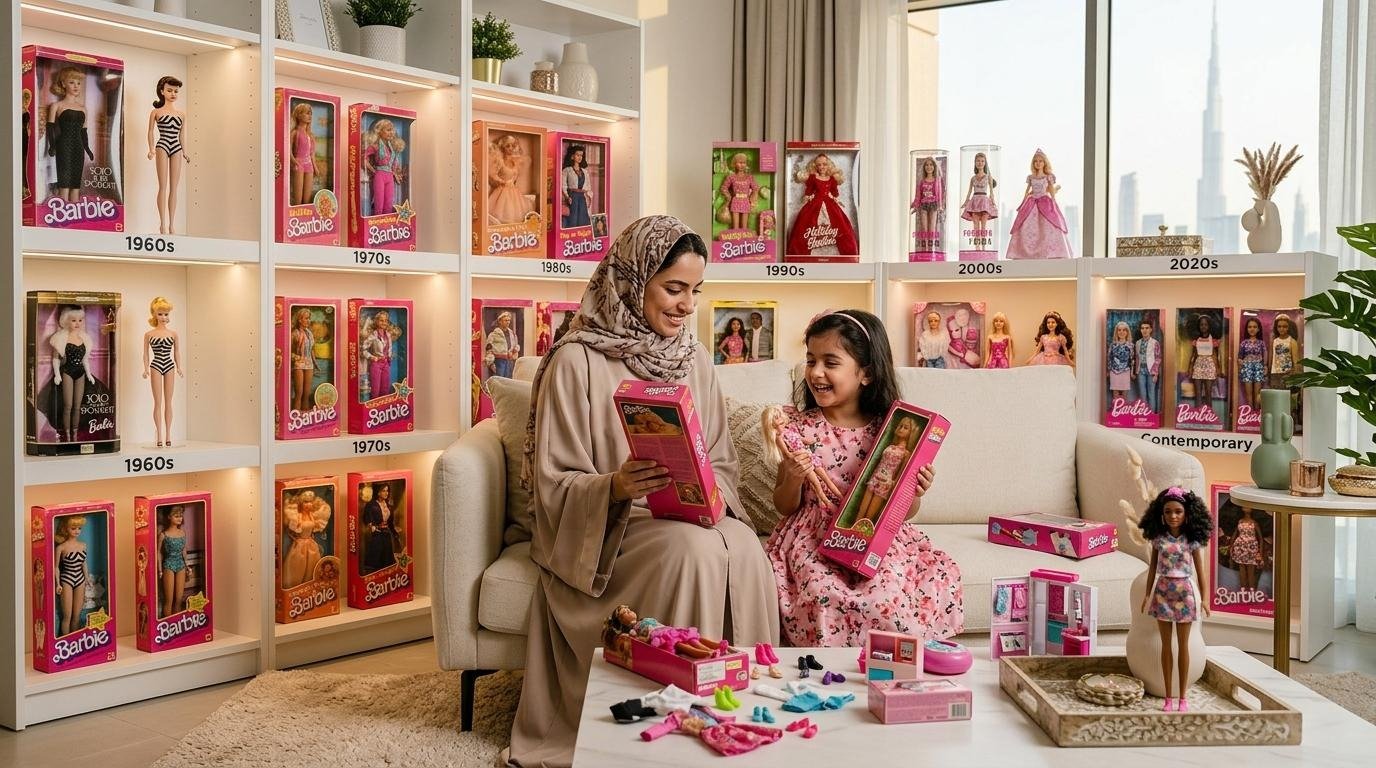
Not just a toy but an emotion, Barbie. Right, millennial moms? A toy that is no longer a toy, it becomes our friend, sister, and everything in between during those playing sessions. When telling your kids about your childhood, you must include your first Barbie and how special it was for you.
Barbie offered a chance to explore adulthood and imagine themselves in different roles, but early iterations of Barbie were criticized for promoting unrealistic beauty standards and a focus on appearance.
See the origin of one of your favourite toys and get a deep dive into nostalgia in this guide.
Barbie: The Origin of Your Childhood
One of the most iconic dolls in the world, Barbie, has a fascinating origin story that began in the mid-20th century.
The mind behind this revolutionary toy was Ruth Handler, who co-founded Mattel with her husband, Elliot Handler. She noticed her daughter, Barbara, playing with paper dolls and imagining them in various adult roles. This was the observation that sparked an idea of creating a doll that could inspire young girls to dream about their futures and explore a wide range of possibilities.
In 1956, Ruth came across a German doll named Bild Lilli during her trip to Europe. Bild lIllid has an adult body and was marked as a gag gift for adults, but Ruth saw potential in this doll for a new kind of play experience for girls. The result? Ruth brought several Bild Lilli dolls back to the United States and began working with Mattel’s designers to create a similar doll but for children.
Barbie made her debut on March 9, 1959, at the American International Toy Fair in New York City. Barbie came from Barbara, Ruth’s daughter. The first Barbie doll wore a black-and-white striped swimsuit, had a ponytail, and came in blonde or brunette. She is now known as “Barbie Teenage Fashion Model.”
The launch of Barbie marked an important milestone in the toy industry. Unlike baby dolls, encouraging girls to play the role of caregiver, Barbie was a symbol of independence and limitless potential.
Mattel’s innovative marketing, including television advertisements targeting children, helped solidify Barbie’s place in popular culture.
Barbe became not just a toy, but a cultural icon.
More Than Pink: Barbie’s Expanding World
Although early Barbies reflected the fashion trends of the 1950s, she soon adopted a variety of careers: astronaut, doctor, firefighter, shattering gender stereotypes at a time when women were largely confined to domestic roles.
Barbie’s aspirational lifestyle solidified after the introduction of the “Dreamhouse” in 1962. She donned countless career outfits from paleontologist to race car driver, inspiring young girls to break stereotypes and dream big.
Importance of Barbie
We as adults sometimes forget that our children’s favourite toy might help decide their future or reshape their thinking. Barbie is not just a toy; it goes beyond that. She has played a significant role in shaping millennial moms’ lives and is continuously doing so. She has taught us about cultural perceptions and provided a platform for girls to explore various roles and careers.
Here are some of the key aspects of Barbie’s importance:
Barbie as a Role Model
She has been a role model for girls, inspiring them to dream big and aspire to various careers, from doctors to astronauts. She has shown us that a woman can succeed in any field.
Reflects Societal Changes
She has played a significant role in mirroring societal changes and trends over the decades. Barbie has evolved from a stereotypical fashion doll to a more inclusive and diverse figure. She represents different ethnicities, body types, and abilities, reflecting the growing awareness and acceptance of diversity in society.
Encourages Creativity and Imagination
Barbie encourages creativity and pushes our children’s minds to think out of the box. Role-playing and storytelling help kids create their own scenarios, adventures, and stories with Barbie, which helps develop their cognitive and social skills.
Barbie captured the imagination of young girls and became a symbol of fashion and style from the moment she was introduced. Barbie has reflected societal changes, from her various careers to her diverse range of friends, and she is still doing so. It shows how a toy cannot be just a toy. It can shape our childhood, inspire us, and break stereotypes.
For every millennial mom, her Barbie dolls were not just dolls but a friend whom they found comfort in. You can also do this for your children. Do not forget about Ken, though!